The first
good boy of
Robinhood Chain
Adopted with exactly 0.01 ETH in a Robinhood account. He accidentally bought the bottom. He has never sold since. He simply waits for his owner to throw the next green candle.
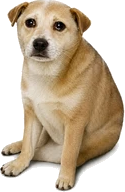
He accidentally bought the bottom.
He has never sold since.
Now he simply waits for his owner to throw the next green candle.
The Lore
Est. Robinhood Chain, Mainnet Day One · LondonHow one accidental dog became the mascot of everything Robinhood spent thirteen years promising: the little guy, holding, on-chain, forever. Read it in order.
The name was always a promise
In the old story, Robin of Loxley took from the rich and gave to the poor. In 2013, two Stanford kids — Vlad Tenev and Baiju Bhatt — borrowed the outlaw’s name and pointed it straight at Wall Street. Zero commissions. No account minimums. A brokerage for the people who’d been priced out of one. They called it Robinhood, and the whole pitch fit on a bumper sticker: finance should belong to everyone. Cash Dog is not a break from that promise. He is the punchline of it.
A dying stock taught a generation the word HOLD
Then came GameStop. Millions of retail traders — most of them on Robinhood — held a left-for-dead stock through a short squeeze and screamed one word at Wall Street until it flinched: hold. They called it diamond hands. It was the first time in modern markets that not selling became an identity, a flex, a religion. Cash Dog wasn’t born yet. But his entire theology was written that winter, by people who refused to press the sell button on principle.
The brokerage became a blockchain
Tenev had been calling tokenization “a freight train coming to financial markets.” He wasn’t bluffing. Robinhood put stocks on-chain in Cannes (To Catch a Token, June 2025), stood up a testnet in Hong Kong that cleared four million transactions in its first week, and on July 1, 2026, on a London stage, flipped the switch on Robinhood Chain — an Arbitrum Layer-2 where the app that democratized trading finally became the rail underneath it. Uniswap deployed a pool on day one. Chainlink wired the oracles. And somewhere in the noise of the launch, a wallet funded with exactly 0.01 ETH minted a dog.
He bought the bottom by accident
He did not read the whitepaper. He did not check the liquidity. He was adopted with 0.01 ETH — the smallest amount the account would let his owner send — and at the exact moment the chart printed its lowest wick, a paw came down on the buy button. He caught the precise bottom. Every trader in the world spends a career trying to do on purpose what Cash Dog did while chasing a fly. Nobody has the heart to tell him it was luck. It looks too much like faith.
Diamond paws
He has never sold. Not one token. Not through a red candle, not through a dip, not through the 3 a.m. rug scare that emptied weaker wallets. He does not have a price target because he does not check the price. He sits by the door with his leash in his mouth and waits for his owner to come home and throw the next green candle. This is the purest form of everything the last decade of retail promised and rarely delivered: the small holder, self-custodied, on-chain, unbothered, forever.
One evening his owner leaned over the account, looked at the wallet that had done nothing but hold since the day it was funded, and asked the oldest question in the book. The answer wasn’t the trader who timed it. It wasn’t the whale who dumped the top.
The one holding.”
The chain of custody
Thirteen years of Robinhood, ending at one dog by a door.
The Hold, by the numbers
Vlad Tenev stayed to finish the freight train — stocks on-chain, a Layer-2 of his own, a brokerage rebuilt as blockchain plumbing. Cash Dog holds a token that only exists because he didn’t stop.
Baiju Bhatt, the co-founder, left to chase space-based solar power. One founder went to the sky; the other laid the rails. Cash Dog just stayed by the door. Everyone waits for their green candle differently.
How to adopt
Four steps. Then never sell.{{ contractAddress }}
{{ st.title }}
{{ st.body }}
Join the pack.
Sit. Stay. Hold.
No roadmap you won’t read. No promises we can’t keep. One dog, one wallet, one rule: we don’t sell. Come wait for the green candle with us.